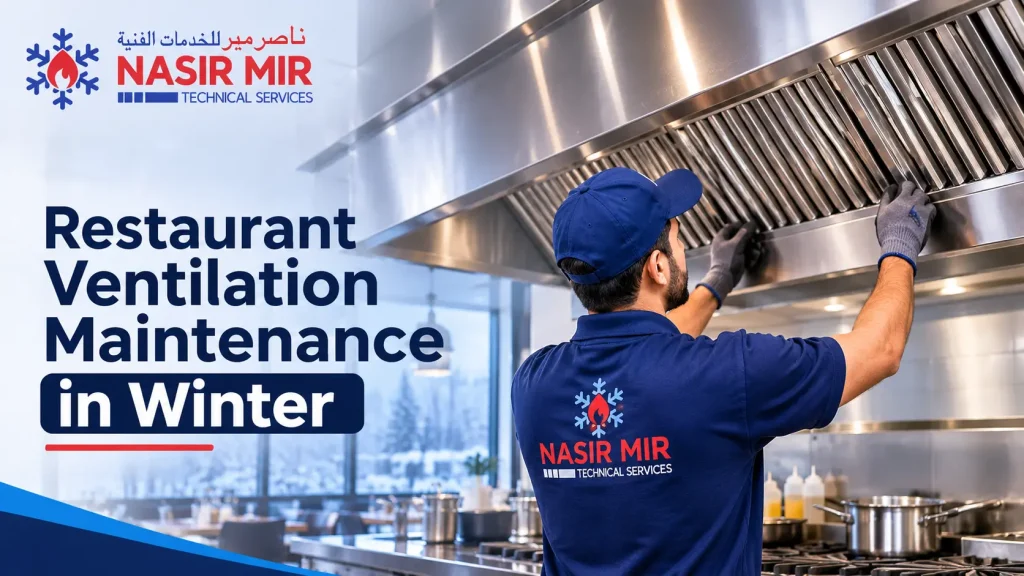
Why Restaurant Ventilation Needs Regular Maintenance in Winter
By NMT Services · Updated 16 November 2026 · 8 min read
“The kitchen is not as hot as it was in July, so the hood must be fine.” It is an easy thought in cooler weather, and it is exactly why winter is when ventilation problems slip through. In summer, a weak system announces itself with heat. In winter, the heat is easier to live with while the grease keeps building and the busiest season of the year arrives.
The UAE is moving into its most comfortable stretch for dining out. Terraces and rooftops fill up, dining rooms run longer shifts, and winter officially starts on 22 December. Cooler, damper mornings are also a good reason to keep an eye on condensation around the kitchen.
This guide covers restaurant ventilation maintenance for the cooler months: how the hood, filters, fan, ducts and make-up air work together, what changes in winter, and what to check before peak season. It is written for owners, chefs and kitchen managers, including anyone searching for exhaust hood service in Ajman or elsewhere in the Emirates. For inspection frequencies, compliance rules and pricing, we already cover those in our kitchen exhaust and hood cleaning guide and compliance guide, so we will not repeat them here.
Restaurant ventilation needs regular maintenance in winter because busier shifts load filters and ducts with more grease, terrace doors and switched-off units upset the air balance that lets a hood capture smoke, and cooler weather hides warning signs like a hot kitchen. Before peak season, check five things: clean or replace the grease filters, listen to the exhaust fan and have its belts checked, confirm the make-up air unit runs whenever the exhaust fan does, look for grease on ducts and the roof fan, and watch for cooking smells in the dining room or doors that are hard to open. If smoke rolls out of the hood, the fan sounds rough, grease drips from the ductwork, or a gas appliance does not draw properly, stop and call a technician rather than waiting for a quiet day.
Three Parts of Your Ventilation System, Three Winter Risks
A kitchen ventilation system is a chain, and the weakest link sets the performance. The quickest way to find yours is to ask: is the problem air coming in, grease being caught, or air going out?
What It Does
The hood and exhaust fan remove air from the kitchen, and make-up air replaces it. Without enough, the kitchen goes under negative pressure and pulls air in through doors, gaps and vents.
Why Winter Matters
Terrace doors propped open for service, or a make-up air unit switched off to save power on a cooler day, can both upset the balance. Cross-drafts weaken the capture zone above the cooking line.
What To Maintain
Confirm the unit runs whenever the exhaust fan runs, clean or replace its filters, and check that fan-speed settings and schedules still match your opening hours.
Watch Out For
Doors that are hard to open, whistling at door gaps, smoke drifting out of the hood, or gas appliances that do not draw properly. Call us straight away for that last one.
What It Does
Kitchen hood filters catch grease before it enters the ducts, while the hood captures heat, smoke and vapour from the cooking line.
Why Winter Matters
More covers and longer service hours mean more cooking volume, so filters load up faster. Loaded filters cut airflow, and a hood that cannot move air cannot capture smoke.
What To Maintain
Staff should clean filters at least weekly, and more often for heavy frying or grilling, check that they fit correctly, and empty grease collectors and condensation channels.
Watch Out For
Haze near the line, greasy film on nearby surfaces, cooking smells reaching the dining room, or filters that no longer sit flush.
What It Does
The exhaust fan pulls grease-laden air through the ducts and out of the building. This is the part you rarely see, which is why it is the part most often forgotten.
Why Winter Matters
Grease that built up over summer meets peak-season volume. A fan failure on a full December night costs far more than the same fault found in a quiet week.
What To Maintain
Exhaust fan maintenance by a technician: clean the blades, check and adjust belts, listen for bearing noise, and inspect ducts for grease.
Watch Out For
A rumble, squeal or vibration, grease dripping from the fan or ductwork, or weak suction even though the fan is running.
Winter Habits That Quietly Hurt Your Ventilation
Most winter ventilation problems are not breakdowns. They are small habits that make sense on the day and add up over the season:
- Propping terrace or back doors open. It feels like free fresh air, but open doors create cross-drafts that can pull smoke out of the hood’s reach.
- Switching off the make-up air unit or AC to save power. The exhaust fan keeps pulling air while nothing replaces it, so the kitchen drifts under negative pressure and the hood struggles.
- Pushing the deep clean to “after the season”. The busiest weeks are exactly when grease loads are highest. Delay now and the next opportunity is a quiet week in spring.
- Skipping filter cleaning during the rush. A missed day is easy to forgive once. A missed week of heavy frying is not.
- Adding exhaust instead of fixing airflow. More extraction without more replacement air tends to make pressure problems worse, not better.
The Pre-Peak-Season Ventilation Checklist
None of these take long, and most can be done by your own team. Do them before the busiest weeks, not during them.
- Clean or replace the grease filters. Check they are the right type and sit flush, with no gaps at the edges.
- Empty grease collectors and condensation channels. Cooler, damper mornings can make damp spots more likely.
- Check the make-up air unit. If you have one, confirm it runs with the exhaust fan and clean or replace its filters.
- Match fan speeds and schedules to opening hours. Extended winter hours and terrace service often outgrow settings made in summer.
- Listen to the exhaust fan. A rumble, squeal or vibration needs a technician. Never open or clean the fan while it can start.
- Look for grease where it should not be. Roof, fan housing and duct joints should be dry and clean.
- Test hood capture. Watch whether steam and smoke are pulled straight into the hood or roll out at the edges.
- Book a professional check in a quiet slot. Early morning or a slow weekday avoids losing service hours, and a commercial kitchen maintenance contract keeps the visits scheduled.
Kitchen Team or Technician? A Simple Split
| Task | Kitchen team | Technician |
|---|---|---|
| Grease filter cleaning | Yes, at least weekly | Checks fit and condition |
| Wiping hood surfaces, emptying collectors | Yes, daily | — |
| Make-up air filter cleaning or replacement | Simple filters, yes | Yes, plus unit operation check |
| Fan blade cleaning, belt check, bearings | No | Yes, with the fan isolated and locked off |
| Duct inspection and cleaning | Visual check of accessible areas | Yes |
| Airflow balance and make-up air testing | No | Yes |
Troubleshooting: What Your Kitchen Is Telling You
| What you notice | Likely cause | What to do |
|---|---|---|
| Smoke or steam rolls out of the hood | Loaded filters, weak fan, or not enough make-up air | Clean filters, check the make-up air unit, then book an airflow check |
| Cooking smells in the dining room | Grease-loaded filters or ducts, or a pressure imbalance pushing air toward the dining area | Clean filters first; arrange a duct and balance inspection |
| Doors hard to open or whistling | Negative pressure from too little replacement air | Check the make-up air unit is running, then call us |
| Rumble or squeal from the roof | Worn bearings, loose belt or dirty blades | Isolate the fan and book a technician |
| Grease dripping from the fan or ductwork | Heavy build-up or a leaking duct joint | Call the same day; grease build-up is a fire risk |
Why Air Balance Matters, in Plain Terms
Building-code specialists at the International Code Council explain the problem simply: air removed by exhaust has to be replaced. When it is not, the building pulls air in through unplanned paths, kitchen hoods capture less, exterior doors become hard to open, and fuel-fired appliances can backdraft.
The cleaning basics are set out locally too. Dubai Municipality’s kitchen food area guidelines call for hoods and grease collection channels to be cleaned daily, filters at least weekly, and the duct interior and fan blades cleaned with the fan switched off, cooled and locked out first.
Where We Help: Kitchen Ventilation Across the Emirates
Winter looks different from emirate to emirate. Corniche restaurants and hotel kitchens in Abu Dhabi, Sharjah, Ajman, Umm Al Quwain, Ras Al Khaimah and Fujairah lean heavily on terrace seating from now until spring, which makes door and airflow habits matter even more. Our teams cover places like Yas Island and Corniche Road in Abu Dhabi, Al Majaz and Al Nahda in Sharjah, Mina Al Arab and Marjan Island in Ras Al Khaimah, and Fujairah Corniche and Dibba. Here is where to find our exhaust and hood service pages:
- Exhaust & hood service in Abu Dhabi
- Exhaust & hood service in Sharjah
- Exhaust & hood service in Ajman
- Exhaust & hood service in Umm Al Quwain
- Exhaust & hood service in Ras Al Khaimah
- Exhaust & hood service in Fujairah
Want to see everything we do locally? Browse our full service pages for Abu Dhabi, Sharjah, Ajman, Umm Al Quwain, Ras Al Khaimah and Fujairah. Our head office is in Ras Al Khor, Dubai, where we also handle exhaust and hood work. Your dining room AC works alongside the kitchen system too, so our 24/7 emergency HVAC service is there if both let you down at once.
Frequently Asked Questions
Why does restaurant ventilation need maintenance in winter if the weather is cooler?
Cooler weather does not reduce cooking. Winter is usually busier, so filters and ducts take on more grease, terrace doors disturb airflow, and the heat that would normally warn you about a weak system is easier to tolerate. Problems hide until peak season.
How often should kitchen hood filters be cleaned?
Dubai Municipality’s kitchen guidance says at least once a week. Kitchens doing heavy frying or grilling often need to clean more often, sometimes daily. Follow the filter manufacturer’s directions as well.
What is make-up air, and does my restaurant need it?
Make-up air is the replacement air that enters the kitchen to balance what the exhaust fan removes. If a hood extracts a lot of air and nothing replaces it, the kitchen goes under negative pressure and the hood captures less. A technician can confirm how your kitchen gets its replacement air.
Can I keep terrace doors open during service?
Open doors can create cross-drafts that weaken the hood’s capture zone, especially close to the cooking line. If you rely on open doors, ask a technician to check hood performance with them open so you know what to expect.
Why do cooking smells reach my dining area?
Usually grease-loaded filters or ducts, or a pressure imbalance that pushes kitchen air toward the dining room. Clean the filters first. If the smell continues, the system needs an inspection.
Can my team clean the exhaust fan?
Your team should handle filters and hood surfaces. Fan blades, belts and ducts need a trained technician, with the fan switched off, cooled and locked out so it cannot start.
Which emirates does NMT Services cover?
We serve Abu Dhabi, Sharjah, Ajman, Umm Al Quwain, Ras Al Khaimah and Fujairah, and we also handle jobs in Dubai.
Book Your Pre-Season Ventilation Check
Tell us your emirate, your kitchen type and what you are noticing. We will tell you honestly what needs doing before your busiest weeks.
Message us on WhatsAppRelated reading: Kitchen equipment maintenance checklist · Hot and cold kitchen equipment maintenance · Kitchen installation and maintenance services